

If you work on a college campus every day, it’s easy to forget how confusing it can be for someone visiting for the first time.
You know the shortcuts. You know which entrance is actually the main entrance. You know that the building everyone calls “Engineering” is technically named something completely different on the official map.
But for someone stepping onto campus for the first time, it can feel like trying to solve a maze.
They might be visiting for a campus tour, attending a graduation, dropping off a student for move-in day, or showing up for a community event. What should be an exciting experience often begins with circling parking lots, staring at outdated maps, or asking strangers for directions.
Campus navigation might not seem like a big deal. But the way people find their way around a university has a surprisingly large impact on the overall experience.
The Hidden Stress of Navigating a College Campus
Large university campuses are beautiful and complex. That’s part of what makes them special. But it also makes them difficult to navigate.
Visitors are often trying to figure out things like:
Where should I park?
Which building entrance do I use?
How do I get from the quad to the student center?
Why does this hallway suddenly end?
Even people who live in the same town as a university often struggle to find their way around when attending events or visiting unfamiliar buildings.
Many campuses were built over decades, sometimes centuries. Buildings connect in unexpected ways. Some entrances sit on different levels because of hills or terrain. What looks like one building from the outside might actually be several structures connected internally.
For someone unfamiliar with the layout, it’s easy to feel disoriented.

The People Who End Up Solving the Problem
When visitors get lost, they usually turn to the nearest person they can find.
That might be a student walking across the quad, a janitorial staff member, or someone working at a reception desk. Visitor centers often receive a steady stream of calls from people asking for directions after they’ve already arrived on campus.
Sometimes the questions are simple:
“Which building is this?”
“Where should I park?”
“Where is the auditorium?”
Other times the directions get more complicated. Someone may already be inside a building but can’t figure out which hallway leads to the correct room.
Staff end up acting as human navigation systems. They help when they can, but it’s not a sustainable solution for large campuses with thousands of visitors.
Why Traditional Campus Maps Fall Short
Most universities still rely on tools that were designed for a different era.
Printed campus maps.
Static PDF maps on websites.
Temporary event signage.
Third-party navigation apps.
These resources help, but they have real limitations.
Printed maps quickly become outdated when construction begins or departments move. PDF maps often show the campus from a bird’s-eye view but don’t explain how people actually walk through it. And third-party map apps frequently route people along roads instead of pedestrian paths.
Campuses change constantly. Buildings get renovated, new entrances open, parking lots shift, and new facilities appear. Static maps simply can’t keep up.
The Impact on Campus Tours and Enrollment
Navigation problems become especially noticeable during campus visits.
For prospective students and their families, that first trip to campus is a major moment. It’s when they begin to imagine what life might look like there. Universities work hard to create memorable tours, highlight their best facilities, and introduce students to campus culture.
But if visitors spend half their time trying to figure out where to go, that experience starts off on the wrong foot.
Students today evaluate universities carefully. They compare programs, campus life, facilities, and the overall environment. If a visitor struggles to find the admissions office or arrives late to a tour because parking wasn’t clear, the campus immediately feels less welcoming.
Something as simple as navigation can quietly influence how a university is perceived.
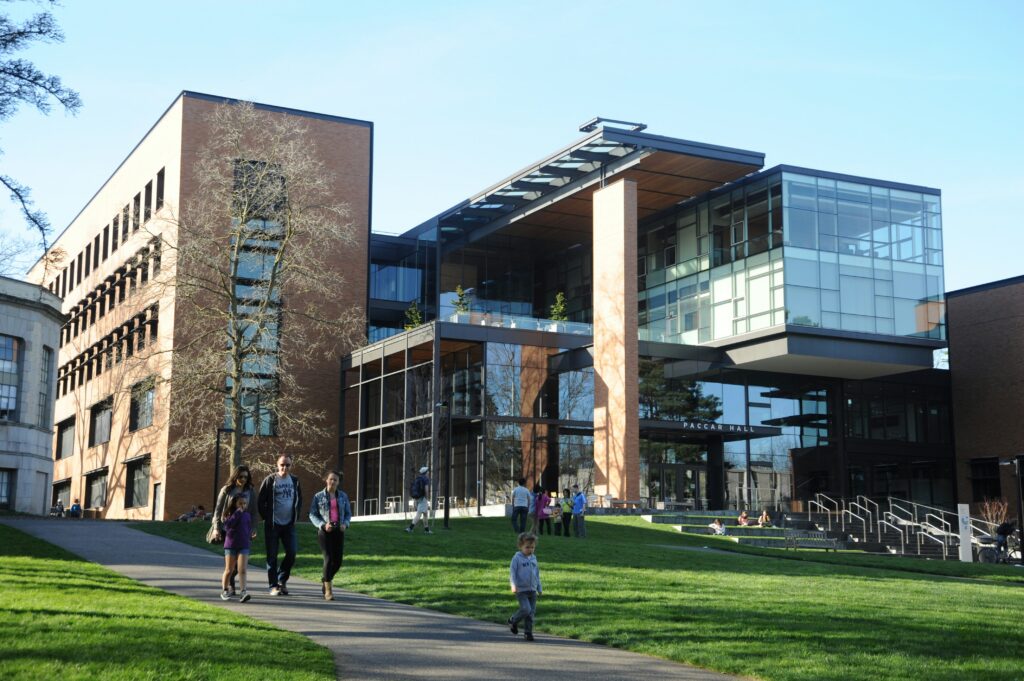
Wayfinding Is Part of the Campus Brand
Branding usually brings to mind logos, colors, and marketing campaigns. But brand is really about how people feel when they interact with an institution.
For many visitors, their first interaction with a university isn’t a classroom or a professor. It’s the experience of arriving on campus and trying to find their destination.
If that experience is confusing, stressful, or frustrating, it shapes their perception of the school.
If the experience feels smooth and intuitive, it sends a completely different signal. It communicates that the university is thoughtful, organized, and welcoming.
Wayfinding may seem like a small operational detail, but it’s actually a powerful part of the visitor experience.
Why Interactive Campus Maps Are Becoming Essential
More universities are beginning to rethink how they approach campus navigation.
Instead of relying entirely on printed maps and signage, many are exploring interactive digital maps that help visitors navigate both outdoor spaces and building interiors directly from their phones.
Modern campus mapping platforms allow universities to guide visitors step-by-step across large campuses, helping them find parking areas, entrances, classrooms, and event spaces.
Solutions like get2there take existing campus layouts and turn them into mobile-friendly interactive maps that can be accessed through a simple link or QR code, without requiring visitors to download an app. g2t Web Copy
Because the maps are digital, campuses can update them easily when construction happens, departments move, or new buildings open.
A Better Experience for Everyone on Campus
At the end of the day, campus wayfinding isn’t really about maps.
It’s about helping people feel comfortable in an unfamiliar place.
When visitors can easily find their destination, they arrive more relaxed and confident. They spend less time worrying about directions and more time enjoying the reason they came to campus in the first place.
Parents focus on their student’s big moment.
Prospective students focus on imagining their future there.
Event guests focus on the experience they came for.
Great wayfinding quietly removes friction from the entire campus experience.
And when that happens, the campus itself gets to take center stage.
Ready to stop being the building’s GPS system? Let’s talk about what better wayfinding could look like for your facility.